
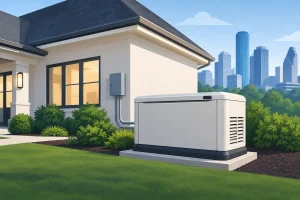
When a Houston storm knocks out power, the inconvenience can become a safety and comfort issue quickly. A whole home generator installation gives your household automatic backup power for the systems that matter most, from air conditioning and refrigeration to lighting, internet, security equipment, and medical devices. Instead of searching for extension cords or waiting in line for fuel, your home can respond to an outage on its own.
For many local homeowners, the decision is not about preparing for a rare event. Hurricane season, thunderstorms, wind damage, and an overloaded grid can all interrupt power with little warning. The right generator system helps your family stay comfortable, protect your home, and avoid the disruption of a dark, hot house.
What Whole Home Generator Installation Does
A standby generator is permanently installed outside your home and connected to its fuel supply and electrical system. When utility power fails, an automatic transfer switch detects the outage, safely separates your home from the utility lines, and tells the generator to start. Within seconds, the system begins supplying electricity to the selected circuits or the entire home.
That automatic response is the major difference between a standby system and a portable generator. Portable units can be useful for limited needs, but they require manual setup, safe outdoor placement, refueling, and careful cord management. A properly installed standby generator is designed to operate without those last-minute steps.
A whole-home system is also not one-size-fits-all. Some households want enough capacity to run every electrical load as usual. Others choose a managed system that keeps essential equipment operating while limiting higher-demand appliances during an outage. The best choice depends on your home’s electrical demand, fuel availability, budget, and what comfort means for your family.
Start With the Loads That Matter Most
Generator sizing is where professional planning makes a real difference. A system that is too small may struggle when your air conditioner, refrigerator, well pump, electric water heater, or other major equipment starts. A system that is unnecessarily large can increase equipment and installation costs without delivering a meaningful benefit.
During an estimate, an electrician should look beyond square footage. Your electrical panel capacity, existing appliances, HVAC equipment, pool equipment, electric vehicle charger, water systems, and planned upgrades all affect the right solution. A newer home with multiple air-conditioning systems has different backup requirements than a smaller home with one central unit.
Think through how you want to live during an outage. If keeping one air conditioner, the refrigerator, lights, Wi-Fi, and a few outlets running is enough, a smaller system may be a smart fit. If you need to maintain full cooling, cook normally, charge vehicles, operate a home office, and keep the entire house powered, you may need a larger generator and a more detailed load-management plan.
The Electrical Work Behind a Safe Installation
A reliable generator is only as good as the electrical work connecting it to your home. The installation includes more than placing equipment on a concrete pad. It requires properly sized wiring, overcurrent protection, grounding, transfer equipment, connections at the service or electrical panel, and compliance with applicable local codes and permitting requirements.
The automatic transfer switch is especially important. It prevents generator power from feeding back into utility lines, a dangerous condition that can threaten utility workers and damage equipment. It also directs power safely between the grid and the generator so your home’s electrical system operates as intended.
In some homes, installation reveals that an electrical panel upgrade or service correction should happen first. Older panels, limited capacity, corrosion, crowded wiring, or outdated components can affect safety and performance. Addressing those issues before adding backup power protects the investment and helps avoid avoidable trouble later.
Houston-area weather adds another planning factor. Generator equipment needs a location with appropriate clearances, a stable base, and room for service access. Placement must consider windows, doors, vents, property lines, drainage, and manufacturer requirements. A qualified installer will evaluate the site rather than selecting the closest open space.
Fuel Planning Is Part of the Decision
Most residential standby generators run on natural gas or propane. Natural gas is a convenient option for homes with an existing service line because the generator can draw fuel without regular refilling. During a widespread emergency, that convenience can be significant, although utility service conditions and generator demand should be considered.
Propane offers dependable onsite fuel storage and may be the better choice where natural gas is unavailable. It does require a properly sized tank and a plan for monitoring fuel levels and arranging deliveries. The right fuel source depends on your property, local availability, runtime expectations, and installation cost.
Your installer should coordinate the electrical scope with the fuel connection requirements. Homeowners should not assume an existing gas line is automatically sized for a generator. Fuel piping must be evaluated so the generator receives enough supply when it is carrying a heavy load.
What to Expect During Whole Home Generator Installation
A professional installation begins with an on-site evaluation and a clear estimate. This is the time to discuss your priorities, review potential generator locations, inspect the electrical service, and identify whether panel work, load management, or fuel-system changes are needed.
After equipment selection, the project typically moves through permitting, site preparation, electrical installation, fuel connection, inspection requirements, startup, and testing. Timing varies based on equipment availability, permit processing, weather, site conditions, and whether other upgrades are necessary. Straightforward projects may move quickly, while homes needing service upgrades or extensive trenching can take longer.
Before the job begins, ask how the installer will protect landscaping, coordinate inspections, test automatic operation, and explain the system once it is running. You should know what happens during an outage, how to recognize normal operating sounds, and who to call if the generator displays an alert.
Spring Electric & A/C helps homeowners coordinate the electrical and home-comfort side of backup power planning, so you are not left trying to manage separate contractors for related work.
Maintenance Keeps Backup Power Ready
A standby generator is not equipment you install and forget. It needs regular exercise and maintenance to remain ready for the day it is needed. Most units run a scheduled self-test, but that does not replace professional service.
Maintenance commonly includes checking the battery, oil, filters, spark plugs when applicable, fluid levels, electrical connections, error codes, and overall operation. The technician should also verify that the transfer switch responds correctly. If your generator is connected to propane, fuel supply and tank levels deserve attention as well.
After a long outage, schedule an inspection before the next severe-weather season. Extended runtime places normal wear on the engine, and catching a small issue early is far easier than discovering it when the lights go out again.
Questions Worth Asking Before You Commit
A dependable contractor will welcome practical questions. Ask whether the proposed generator can support your preferred HVAC operation, which loads are included, whether load-shedding equipment is recommended, and what electrical upgrades are required. Ask about permit handling, warranty coverage, startup testing, maintenance needs, and expected operating noise.
It is also wise to ask for a clear explanation of what is included in the estimate. Generator projects can involve electrical labor, transfer equipment, a pad, fuel connections, permits, trenching, panel modifications, and restoration work. A detailed scope helps you compare proposals fairly and prevents surprises after work begins.
Do not let price alone make the decision. Backup power is a safety system tied directly to your home’s electrical service. Accurate sizing, safe code compliance, quality connections, and responsive support matter long after installation day.
The best time to plan for an outage is when your home is comfortable and the weather is calm. A thoughtful generator estimate now can give your family a clear path to safer, cooler, more reliable power when the next storm arrives.


Leave a Reply