
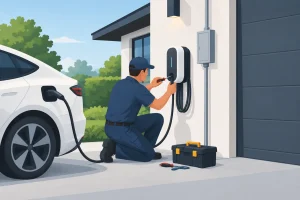
Pulling into your driveway with a low battery should not mean planning a stop at a public charging station. A properly planned home EV charger installation gives you a dependable place to charge overnight, start the day with more range, and make electric vehicle ownership easier on your schedule.
For Houston-area homeowners, the charger itself is only part of the project. Your electrical panel, available capacity, garage layout, local permitting requirements, and the condition of existing wiring all affect the right solution. A professional installation protects your home, supports reliable charging, and helps prevent the costly surprises that can come from treating a high-powered appliance like a simple outlet upgrade.
Start With the Charging Speed You Actually Need
Most EV owners choose between Level 1 and Level 2 charging at home. Level 1 uses a standard 120-volt receptacle. It is slow, but it can work for drivers with short daily commutes, a plug-in hybrid, or plenty of time between drives. The limitation is convenience: replenishing a larger battery can take several days.
Level 2 charging uses 240 volts and is the practical choice for many all-electric vehicles. Depending on the vehicle, charger, and circuit size, it can add enough range overnight for daily driving and much more. It is especially useful for households with longer commutes, busy family schedules, or more than one EV.
More power is not automatically better. A charger should be sized for your vehicle’s charging capability, your driving habits, and your home’s electrical capacity. Installing an oversized unit without evaluating the panel can create avoidable expense or require upgrades that do not deliver a meaningful benefit.
What a Home EV Charger Installation Includes
A safe installation begins with an on-site electrical assessment. An electrician reviews the main service panel, identifies available capacity, checks the condition of the equipment, and determines the best route for new wiring. In many homes, the charger needs a dedicated 240-volt circuit with correctly sized conductors and a properly rated breaker.
The location matters as much as the circuit. A garage wall is often straightforward, but a driveway, detached garage, carport, or exterior location may require a longer wire run, weather-rated equipment, trenching, or added protection from vehicle damage. The goal is a charger that is accessible every day without creating trip hazards, strained cables, or awkward parking routines.
Your electrician will also determine whether a hardwired charger or a receptacle-based setup makes more sense. Hardwired equipment can be a clean, durable choice and may support higher charging output. A receptacle can make future charger replacement easier, but it must be rated and installed for the continuous load. The right answer depends on the equipment, manufacturer instructions, and how you plan to use it.
Your Electrical Panel May Need Attention
Many newer homes have enough room and capacity for an EV circuit. Others do not. If your panel is full, undersized, outdated, or already carrying major loads such as central air conditioning, electric heat, pool equipment, or a workshop, an upgrade may be needed before adding a charger.
That does not always mean replacing the entire electrical service. Sometimes the solution is reorganizing circuits, installing a subpanel, or using load-management equipment that helps coordinate high-demand appliances. In other cases, a panel upgrade is the safer long-term investment, particularly if you are also planning a generator, additional HVAC equipment, or other home improvements.
Houston heat makes this conversation especially important. Your air conditioner may run hard during the same evening hours when the vehicle is plugged in. A qualified electrician evaluates the home’s expected electrical load rather than assuming an open breaker space means the system can safely handle more demand.
Why Load Calculations Matter
A load calculation looks at how much electricity the home is designed to use and how major equipment affects that demand. It accounts for items such as air conditioning, electric ranges, dryers, water heaters, pool pumps, and the proposed EV charger. This step helps prevent overloaded equipment, nuisance breaker trips, overheating, and unsafe shortcuts.
It also gives homeowners a clearer plan. If a panel upgrade is recommended, you should understand why, what it includes, and how it supports your future power needs. Clear answers before work begins are part of dependable service.
Permits and Code Compliance Protect Your Home
EV chargers draw power for long periods, which is different from plugging in a tool for a few minutes. Electrical code rules address continuous loads, circuit protection, wire sizing, grounding, equipment ratings, and the location of outdoor or garage installations. Permitting and inspection requirements can vary by municipality, so local knowledge matters.
Skipping permits or relying on improvised wiring may seem faster, but it can lead to failed inspections, insurance concerns, equipment damage, and expensive corrections later. It may also affect a future home sale when buyers or inspectors find unpermitted electrical work.
Professional installation means the work is planned around current code requirements and manufacturer specifications. That protects the investment in your vehicle and supports the safety of everyone using your garage or driveway.
Plan for the Way You Live, Not Just Today’s Vehicle
The best charger location is usually the one that keeps daily charging simple. Consider where the vehicle parks, where the charge port is located, whether a second EV may be added later, and how the cable will reach the car without crossing a walkway. If you are renovating a garage or building a detached structure, adding EV charging infrastructure during construction can save time and disruption later.
Smart chargers can be useful for homeowners who want scheduled charging, energy-use tracking, or the ability to charge during preferred utility hours. They are not required for every household. A straightforward, durable charger may be the better fit if you simply want reliable overnight charging without extra app features.
It is also worth thinking beyond the charger. If backup power is part of your plans, ask how a future generator and EV circuit would work together. Generator capacity, load priorities, and transfer equipment should be planned carefully. An EV charger does not always need to run during an outage, and setting priorities ahead of time can help your backup system serve the loads that matter most.
Signs You Should Schedule an Electrical Assessment
A few warning signs call for a professional evaluation before purchasing or installing charging equipment. These include a panel with no open spaces, breakers that trip regularly, flickering lights when large appliances start, warm outlets or panel components, visible corrosion, or an older fuse-based electrical system.
You should also schedule an assessment if you are unsure of your home’s service size or if a previous owner added electrical work without clear labeling. A charging circuit should never be added by sharing an existing appliance circuit, using extension cords, or relying on adapters not approved for EV charging. Those shortcuts can overheat connections and create a serious fire risk.
Choose Workmanship That Holds Up
A home charger should feel like part of the house, not a temporary workaround. That means neat wiring, secure mounting, correctly labeled circuits, appropriate weather protection, and a final check that the charger operates as intended. It also means leaving the homeowner with practical answers about breaker operation, charging settings, and what to do if a problem occurs.
Spring Electric & A/C helps homeowners in Houston, Spring, and surrounding communities plan EV charging around the whole home electrical system. Whether the job calls for a dedicated circuit, a panel upgrade, or a more involved installation route, the focus stays on safe code compliance and dependable performance.
Before you buy a charger based on its highest advertised output, schedule an electrical assessment. A clear plan built around your vehicle, your home, and your daily routine will make charging easier for years to come.


Leave a Reply