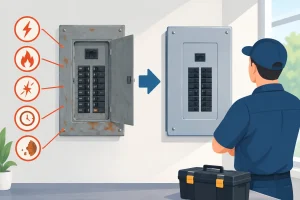
A breaker that trips once after a storm or a heavy appliance starts may not mean your whole system is failing. But repeated trouble at the panel is different. Knowing the signs electrical panel needs replacement helps Houston-area homeowners address a safety concern before it turns into damaged equipment, lost power, or a fire risk.
Your electrical panel is the traffic controller for the circuits throughout your home. It distributes power to lights, outlets, air conditioning equipment, appliances, and newer additions like EV chargers. Older panels were not built around the electrical demand of a modern Texas household. When capacity, condition, or safety becomes a concern, a professional panel upgrade can provide reliable power and safe code compliance.
1. Breakers Trip Repeatedly
A circuit breaker is designed to trip when a circuit is overloaded or a fault is detected. That protective action is a good thing. The concern begins when the same breaker trips again and again during normal use.
For example, if running a microwave, coffee maker, and toaster in the kitchen trips a breaker every morning, that circuit may be overloaded. If the air conditioner, dryer, or garage equipment causes frequent outages, the issue could be a worn breaker, undersized circuit, loose connection, or panel capacity problem.
A single circuit repair may solve the issue. However, frequent tripping across several areas of the house is one of the clearest signs that the panel needs a closer inspection. Avoid repeatedly resetting a breaker without finding the cause. A breaker that will not stay on is communicating a problem, not creating an inconvenience.
2. The Panel Feels Warm, Smells Burnt, or Makes Noise
Your electrical panel should operate quietly and remain cool under normal conditions. A warm cover, burning odor, buzzing sound, crackling, or visible smoke calls for immediate attention. These symptoms can point to overheating, arcing, damaged wiring, or a failing breaker connection.
Turn off power only if it is safe to do so, keep clear of the panel, and call a qualified electrician promptly. Do not remove the panel cover or try to tighten connections yourself. Electrical work inside a live panel carries serious shock and fire hazards.
Houston heat already puts pressure on air-conditioning systems and the electrical equipment that supports them. A panel that is overheating should never be dismissed as a seasonal issue. Fast problem solving can prevent a small electrical fault from becoming a costly emergency.
3. Rust, Corrosion, or Water Damage Is Present
Water and electricity do not mix. Rust on the panel cabinet, corrosion around breakers, water stains, or moisture inside the panel can compromise connections and reduce the system’s ability to operate safely.
This problem can occur after roof leaks, plumbing leaks, flood exposure, storm damage, or condensation near HVAC equipment. Even when the panel appears to be working, corrosion may continue behind the cover and affect breakers, bus bars, and wiring terminals.
An electrician can determine whether the problem is limited to the enclosure or whether internal components need replacement. The source of moisture must also be corrected. Replacing a damaged panel without addressing a recurring leak simply sets up the new equipment for the same failure.
4. Your Home Still Has an Outdated Fuse Box or Problem Panel
Many older homes in the Houston area have electrical equipment that no longer meets the needs of the household. Fuse boxes, for example, can be reliable when properly maintained, but they offer less convenience and capacity for modern electrical use. Homeowners sometimes install oversized fuses to stop them from blowing, which creates a serious fire hazard.
Some older panel brands and models also have known reliability concerns. If an electrician identifies a panel that has a history of breakers failing to trip properly, replacement is usually the safer choice. This is not a place to wait for a visible failure. A breaker must work when a fault occurs, not after.
A professional inspection provides the facts. The age of the panel alone does not automatically require replacement, but outdated equipment, unavailable parts, visible deterioration, or unsafe performance often does.
5. You Are Adding High-Demand Equipment
A panel can be in good condition and still be too small for the way you use your home. This is common when homeowners add an EV charger, electric range, hot tub, pool equipment, workshop tools, a second air-conditioning system, or a standby generator.
These projects require more than finding an open breaker slot. An electrician should calculate the home’s electrical load and confirm that the service and panel can safely support the addition. In some cases, a new dedicated circuit is enough. In others, a panel upgrade or service upgrade is needed to create safe capacity.
This planning step matters for comfort and reliability. An EV charger should not compete with your air conditioner on a hot summer afternoon. A generator should be installed with the proper transfer equipment so it powers selected circuits safely during an outage. Upgrading before installation helps prevent nuisance trips and protects your investment.
6. Lights Flicker or Power Is Unreliable Throughout the House
A flickering light can be as simple as a loose bulb. But lights that dim when the AC starts, outlets that work intermittently, or power that cuts in and out in multiple rooms should be inspected.
The cause may be a loose neutral connection, damaged service equipment, failing breakers, or wiring issues. Some of these conditions can damage sensitive electronics or create heat at connection points. If flickering is widespread, do not assume it is normal because the home is older.
It also helps to notice when the problem occurs. If lights dim only on one circuit when a large appliance starts, the issue may be local. If several circuits are affected or the whole house experiences inconsistent power, the panel or incoming electrical service may be involved. Accurate diagnostics are the first step toward the right repair.
7. The Panel Is Full and Relies on Workarounds
A crowded panel with no room for additional circuits is not automatically unsafe. However, it becomes a problem when past additions have led to double-tapped breakers, oversized breakers, improvised subpanels, or circuits that serve too many rooms and appliances.
Modern homes need dedicated circuits for key equipment. Kitchens, bathrooms, laundry areas, garages, HVAC systems, and outdoor spaces have specific electrical requirements. A panel upgrade can create room to organize those circuits correctly and support future improvements such as landscape lighting, a ceiling fan, or an EV charger.
This is one of the practical signs electrical panel needs replacement because it affects what you can safely add to your home. A larger, properly configured panel can improve convenience, support resale value, and reduce the need for repeated electrical workarounds.
When Replacement Is Better Than Repair
Not every panel issue requires a full replacement. A single defective breaker, loose connection, or damaged circuit may be repaired safely if the panel is otherwise in good condition and has adequate capacity. Replacement becomes the better long-term choice when there is widespread corrosion, recurring overheating, unsafe or obsolete equipment, insufficient capacity, or a pattern of failures.
The right answer depends on the home’s age, electrical load, panel condition, and your plans for the property. A thorough evaluation should include the panel, breakers, grounding and bonding, visible wiring, service size, and the equipment you plan to add. Clear recommendations matter because homeowners should know whether they need a targeted repair or a complete upgrade.
Spring Electric & A/C helps homeowners make that decision without unnecessary guesswork. Whether the concern is a warm panel, repeated breaker trips, a generator plan, or preparing for an EV charger, a qualified electrician can identify the cause and recommend a safe path forward.
If your panel is showing any of these warning signs, schedule an electrical inspection before the next outage, renovation, or high-demand installation puts more stress on the system. Reliable power starts with equipment that is ready to protect your home.


Leave a Reply