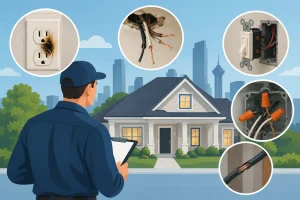
A light that flickers when the AC starts, an outlet that feels warm, or a breaker that trips every week may seem like separate annoyances. They can all be wiring fault examples, and in a Houston home, they deserve prompt attention. Electrical problems rarely improve on their own. With heavy air-conditioning use, modern appliances, EV chargers, and backup-power needs, a small fault can become a safety issue or leave your family without the comfort and power you depend on.
The good news is that most electrical issues give warning signs before they become a major failure. Knowing what to watch for helps you make a fast, informed call. The right repair starts with accurate troubleshooting, not guesswork.
10 Wiring Fault Examples to Watch for at Home
1. Loose outlet or switch connections
An outlet that works only when a plug is held at a certain angle may have a loose connection. So can a switch that crackles, feels loose in the wall, or causes a nearby light to blink. Loose wiring creates resistance, and resistance creates heat. Over time, that heat can damage the outlet, insulation, or wiring behind the wall.
Do not keep using an outlet that is warm, discolored, sparking, or unreliable. Turn off the circuit if you can do so safely, unplug connected devices, and schedule a professional inspection. Replacing the visible outlet alone may not fix a damaged connection farther back in the box.
2. Frequently tripping circuit breakers
A breaker is designed to shut off power when a circuit is overloaded or a fault is present. One trip after running a space heater, microwave, and toaster on the same kitchen circuit may simply mean the circuit was asked to carry too much. Repeated trips, however, call for diagnosis.
The cause may be overloaded wiring, a failing appliance, a short circuit, a damaged receptacle, or a panel issue. Resetting the breaker again and again is not a repair. A qualified electrician can test the circuit, identify the source, and determine whether repair, a dedicated circuit, or a panel upgrade is the safer answer.
3. Flickering or dimming lights
Lights that dim briefly when your AC system starts can sometimes occur in an older home with limited electrical capacity. But lights that flicker in one room, pulse at random, or change brightness when another device runs can also point to a loose neutral, poor connection, or failing fixture.
Pay attention to the pattern. One flickering fixture may be a bulb or fixture problem. Multiple lights flickering across the home is more serious and may involve the electrical panel, service connection, or a main neutral issue. This is not a problem to postpone, especially if it is accompanied by buzzing, burning smells, or power interruptions.
4. Burn marks, hot cover plates, or a burning odor
A burning smell near an outlet, switch, panel, or ceiling fixture is an immediate warning sign. Brown marks on a receptacle cover, melted plastic, or a cover plate that feels hot can indicate arcing or overheating inside the electrical box.
Turn off power to the affected circuit if it is safe to access the panel. Do not spray water on electrical equipment or continue using the device. Call for emergency electrical service. Fast problem solving matters here because heat damage can spread beyond the component you can see.
5. Damaged or outdated wiring insulation
Wiring insulation can become brittle from age, heat, pests, moisture, or renovations. In attics and crawl spaces, rodents may chew wiring. In older homes, insulation may crack or wiring methods may no longer meet current safety expectations.
This type of fault is not always obvious from inside the living space. Clues include intermittent power, unexplained breaker trips, a smell of overheated material, or issues after storms or attic work. A professional inspection can confirm the condition of the wiring and recommend repairs that protect both the home and the people in it.
6. Ungrounded outlets or improper grounding
Older two-slot outlets do not provide a grounding path for many modern electronics and appliances. Grounding helps direct fault current safely away from people and equipment. It is especially important for devices with metal cases, outdoor equipment, garage tools, and sensitive electronics.
Adding a three-slot outlet does not automatically create a ground. If the wiring does not include a proper grounding conductor, simply changing the receptacle can create a false sense of security. The right solution depends on the home’s wiring, the circuit location, and current code requirements.
7. Missing or failed GFCI protection
Ground-fault circuit interrupter, or GFCI, protection is used in areas where electricity and moisture may meet, including bathrooms, kitchens, garages, laundry rooms, outdoor spaces, and pool-adjacent areas. A GFCI outlet or breaker shuts power off quickly when it detects an imbalance that may signal current flowing where it should not.
A GFCI that will not reset, trips without an obvious reason, or has no power downstream may be faulty, but the circuit may also have a wiring problem. Since these devices are safety equipment, they should be tested and repaired correctly rather than bypassed.
8. Overloaded extension cords and power strips
Extension cords and power strips are useful for temporary needs, not permanent wiring solutions. A room that relies on several cords to power televisions, computers, portable AC units, or kitchen appliances may not have enough outlets or circuits for how it is being used.
Warm cords, loose plugs, overloaded strips, and cords hidden under rugs are common hazards. Installing additional properly wired outlets or a dedicated circuit is safer, cleaner, and more dependable. This is often a practical upgrade for home offices, media rooms, garages, and workshops.
9. Aluminum wiring or mixed wiring connections
Some older homes may have aluminum branch-circuit wiring. Aluminum wiring is not automatically unsafe, but it needs the right connectors, devices, installation practices, and ongoing attention. Improper connections between aluminum and copper conductors can loosen over time and overheat.
If you know or suspect your home has aluminum wiring, do not assume a standard outlet replacement is routine. An electrician should inspect the system and explain which repairs or upgrades are appropriate for your home. The best recommendation depends on the wiring condition and the scope of the issue.
10. Insufficient electrical capacity for modern equipment
Today’s homes use more power than homes built decades ago. Central air conditioning, electric dryers, induction ranges, EV chargers, pool equipment, hot tubs, and generators all add electrical demand. A panel that once handled a home comfortably may now be operating near its limit.
Warning signs include crowded panel wiring, limited breaker space, recurring overloads, or an inability to add a needed circuit safely. A panel upgrade is not the answer to every electrical problem, but it can be the right long-term investment when your system no longer supports your household safely and reliably.
When a Wiring Fault Needs Immediate Service
Some problems can wait for a scheduled appointment. Others require same-day attention. Treat a burning odor, sparks, smoke, shock from an outlet or appliance, a hot electrical panel, repeated breaker tripping, or widespread flickering as urgent. If there is active smoke or fire, leave the home and call emergency services first.
For less urgent concerns, write down what you notice before service arrives. Note which rooms are affected, what was running at the time, whether a breaker tripped, and whether the problem happens during AC operation or after rain. Those details help an electrician diagnose the issue faster and avoid unnecessary repairs.
Why Professional Troubleshooting Matters
Electrical faults can look alike from the outside. A dead outlet might be a tripped GFCI, a failed receptacle, a loose wire, a damaged circuit, or a panel problem. Replacing parts until something works can hide the real defect and create more risk.
Professional troubleshooting identifies the cause, checks the condition of the circuit, and makes repairs with safe code compliance in mind. It also helps homeowners make smart decisions about upgrades. For example, a new dedicated circuit may solve a garage power problem more effectively than adding another power strip. In another home, an aging panel may need attention before adding an EV charger or generator.
Spring Electric & A/C helps Houston-area homeowners with electrical repairs, panel upgrades, dedicated circuits, lighting, ceiling fans, EV charger installation, and backup-power planning. No job is too small, and a clear explanation of the problem should always come before the repair.
If an outlet is hot, lights are flickering, or breakers keep tripping, trust the warning sign. Prompt service can protect your home, prevent costly damage, and keep your power and comfort where they belong.


Leave a Reply