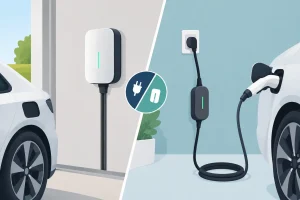
A new EV charger should make leaving home easier, not add another weak point to your electrical system. When comparing hardwired versus plug in chargers, the right choice comes down to your driving habits, garage setup, electrical capacity, and plans for the home. Both can provide dependable Level 2 charging, but they are not interchangeable in every situation.
For Houston-area homeowners, heat, daily commuting, storm preparation, and a growing number of high-demand appliances all deserve consideration before installation. A qualified electrician can confirm that your charger, circuit, panel, and wiring work together safely from day one.
Hardwired Versus Plug In Chargers: The Main Difference
A hardwired EV charger is permanently connected to a dedicated circuit. The charging equipment is mounted on the wall, and its wiring runs directly into an electrical box rather than plugging into an outlet. This is a fixed installation designed for long-term use.
A plug in charger connects to a properly installed receptacle, often a 240-volt outlet such as a NEMA 14-50. The charging unit can be unplugged and removed if needed. It is still a serious electrical installation, not simply an appliance that should be connected to any available outlet.
Both options can safely charge an electric vehicle when the equipment is correctly matched to the circuit and installed to current code requirements. The practical difference is in permanence, power capability, maintenance needs, and flexibility.
Why Many Homeowners Choose a Hardwired Charger
Hardwiring is often the best fit for homeowners who expect to charge at home for years. Because the charger connects directly to a dedicated circuit, there is no outlet or plug connection that can loosen, wear, or overheat over time.
That direct connection can also support higher charging output when the home’s electrical system has adequate capacity. Some hardwired chargers can be configured for more amperage than comparable plug in models. More available amperage can reduce charging time, which matters for households with long commutes, larger EV batteries, or more than one electric vehicle.
A hardwired unit also creates a clean, permanent look in the garage. The wiring is protected, the charger stays in its intended location, and there is less temptation to use an extension cord or make an unsafe connection. For a charger installed outdoors, a professionally hardwired setup can be especially practical because the electrician can select equipment and weather protection suited to the location.
The trade-off is flexibility. If you move, replace the charger, or want to take the unit to another property, removal requires electrical work. That is usually a minor concern for a long-term installation, but it is worth considering before choosing equipment.
When a Plug In Charger Makes Sense
A plug in charger can be a smart choice for homeowners who want flexibility. If you already have a correctly installed, dedicated 240-volt receptacle in the garage, connecting a compatible Level 2 charger may be more straightforward than installing a new hardwired unit.
This setup can also make replacement easier. If a charger needs service or you upgrade to a different model later, the unit can be unplugged without disconnecting permanent wiring. Homeowners who may relocate in the near future sometimes prefer the ability to take their charger with them.
However, the outlet must be designed and installed for EV charging. EV chargers are considered continuous loads because they can run for hours at a time. A receptacle that was installed for occasional use by a welder, RV, or other equipment may not be ideal for repeated high-load charging unless its circuit, wiring, breaker, and receptacle rating have all been verified.
The receptacle itself matters. Lower-quality outlets can wear from repeated plugging and unplugging, or they may generate heat under sustained load. A professional installation uses equipment rated for the application and confirms the charger settings match the circuit capacity. If the charger is meant to stay plugged in, avoid unnecessary unplugging and inspect the connection if you ever notice warmth, discoloration, cracking, or a loose fit.
Charging Speed Depends on More Than the Connection Type
Hardwired does not automatically mean faster, and plug in does not automatically mean slow. Charging speed depends on several limits working together: the vehicle’s onboard charging capability, the charger’s output setting, the dedicated circuit size, and the available capacity in the electrical panel.
For example, an EV may accept only a certain number of amps even if the charger can provide more. A charger on a properly designed 50-amp circuit may be plenty for a driver who charges overnight and leaves with a full battery each morning. Another household may benefit from a larger hardwired circuit because two drivers need to recharge between trips.
Your vehicle’s manual and charger specifications are useful starting points, but they do not replace an electrical assessment. An electrician should calculate the continuous load correctly and inspect the service panel before promising a particular charging rate. This prevents nuisance breaker trips, overheated equipment, and costly changes after installation has started.
Check Your Panel Before Buying the Charger
The charger is only one part of the project. Many homes have enough capacity for EV charging, while others need a panel upgrade, load management equipment, or a different charging strategy. Older homes and homes with electric dryers, pool equipment, hot tubs, electric ranges, or multiple HVAC systems deserve a closer look.
This is especially relevant during a Houston summer. Your air-conditioning system may be working hard when you arrive home and plug in the vehicle. A professional load calculation considers how your home uses power, not just the amperage printed on the main breaker.
In some cases, a homeowner does not need a full panel upgrade. A properly selected charger with adjustable output may fit the home’s current capacity. In other cases, upgrading the panel provides a safer foundation for EV charging, future appliances, backup power, or additional home improvements. The right answer should be based on the home, not a one-size-fits-all recommendation.
Safety and Code Compliance Are Part of the Decision
Do not install a 240-volt receptacle, increase a breaker size, or modify panel wiring as a do-it-yourself project. EV charging places a sustained demand on the electrical system, and small installation mistakes can create heat, damaged wiring, failed breakers, or fire risk.
A professional installation includes more than mounting the charger. It should account for the dedicated circuit, conductor size, breaker rating, outlet or hardwired connection, grounding, required protection, location, clearances, and local permit requirements. Equipment instructions matter too. Chargers have specific installation and configuration requirements that must be followed to preserve safe operation and manufacturer coverage.
For outdoor installations, the details become even more important. The charger and connection method must be rated for the environment, protected from physical damage, and positioned where the charging cable can reach the vehicle without becoming a trip hazard or crossing a walkway.
How to Choose the Best Setup for Your Home
Choose a hardwired charger if you want a permanent, clean installation, need higher charging capacity, or expect the charger to stay in place for the long term. It is often the preferred solution for daily EV drivers and homes planning around future electrical upgrades.
Choose a plug in charger if portability matters, you already have a properly installed EV-ready receptacle, and the charger’s power requirements fit that circuit. It can be convenient, but the outlet and wiring should never be assumed safe based on appearance alone.
Before purchasing either type, consider where you park, how far the charging cable must reach, when you charge, how many miles you drive each day, and whether a second EV may be in your future. Ask for an assessment of your panel capacity and a clear explanation of any recommended upgrades.
A dependable charging setup should feel simple once it is installed: park, connect, and wake up ready to go. Spring Electric & A/C can help homeowners choose and install an EV charging solution that protects the home’s electrical system while supporting everyday driving with confidence.


Leave a Reply