A breaker that trips once may be doing its job. A breaker that keeps tripping is your home telling you something needs attention. If you are looking for an electrician for tripping breaker trouble, prompt diagnosis can protect your wiring, appliances, and family from a bigger electrical problem.
In Houston-area homes, overloaded circuits are common. Central air conditioning, space heaters, kitchen appliances, garage tools, EV chargers, and modern electronics all place demands on electrical systems that may have been installed decades ago. The right fix depends on why the breaker is opening – and resetting it over and over is not a repair.
Why a Circuit Breaker Trips
A circuit breaker is a safety device. It shuts off power when it detects an unsafe condition, helping prevent overheated wires, equipment damage, and electrical fires. The trip itself is not the problem. The condition causing it is what needs to be found.
An overloaded circuit
An overload happens when a circuit is asked to supply more electricity than it is designed to handle. For example, a microwave, coffee maker, toaster oven, and air fryer running on the same kitchen circuit can exceed its capacity. In a bedroom or garage, a portable heater, power tools, or multiple extension cords can do the same.
This issue is often simple to identify when the breaker trips only while several items are operating at once. Still, the solution is not always just using fewer devices. If your household routinely needs more power in that area, a dedicated circuit or electrical upgrade may be the safer, more convenient answer.
A short circuit or ground fault
A short circuit occurs when a hot wire touches a neutral wire or another unintended conductive path. A ground fault occurs when electricity travels outside its intended path to ground. Both can cause a breaker to trip immediately, sometimes with a pop, burning smell, scorch mark, or flicker.
These problems can come from damaged wiring, a loose connection, moisture in an outdoor receptacle, a worn appliance cord, or an issue inside a switch, outlet, or junction box. They require professional troubleshooting. Do not keep resetting the breaker to see if it will hold.
A failing appliance or plugged-in device
Sometimes the electrical system is working correctly and one appliance is the source of the problem. An aging refrigerator, garbage disposal, washing machine, window unit, tool, or phone charger can develop an internal fault that trips the circuit.
A useful observation is whether the breaker trips only when a particular item is plugged in or turned on. Unplug the device, leave the breaker off, and arrange for qualified help if you notice heat, damage, smoke, or a burnt odor. Avoid opening appliances or attempting to repair their electrical components yourself.
A weak or outdated breaker
Circuit breakers can wear out. Age, heat, corrosion, loose panel connections, and repeated tripping can affect their performance. A breaker that feels hot, will not reset, trips without an apparent load, or makes buzzing sounds deserves immediate attention.
The breaker may be the issue, but it should never be replaced based on guesswork. Installing a larger breaker without confirming wire size and circuit design can create a serious fire risk. Safe code compliance means matching the breaker, wiring, and expected load correctly.
When a Tripping Breaker Is an Emergency
Turn off the affected breaker and call for emergency electrical service when you see or smell signs of overheating. Fast action matters when electrical components are involved.
Warning signs include a burning odor, smoke, a buzzing or crackling panel, discolored outlets, sparks, a breaker that is hot to the touch, or power loss after water exposure. You should also treat repeated trips on an HVAC circuit seriously, especially during a Houston heat wave. Your air conditioner may have an electrical fault, a failing component, or a circuit that needs professional evaluation.
If water is near an outlet, panel, extension cord, or electrical equipment, stay clear of the area. Do not touch standing water or try to reset the breaker. Shut off power only if you can do so safely from a dry location, then wait for a qualified technician.
What You Can Safely Check Before Calling
Homeowners can provide helpful details without taking electrical risks. First, note which breaker has tripped and what rooms, outlets, or equipment lost power. Then think about what was running immediately before the trip.
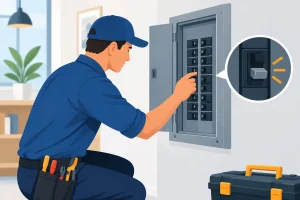
You may unplug portable devices on that circuit and reset the breaker one time. Move the handle fully to the OFF position first, then back to ON. If it trips again, will not reset, or you notice any warning signs, leave it off. Do not hold the breaker in place, replace it yourself, or use an extension cord as a permanent workaround.
It also helps to tell your electrician whether the problem occurs during rain, when the air conditioner starts, when the dryer runs, or after using a specific appliance. Those details can shorten the diagnostic process and help identify an intermittent fault.
How an Electrician Finds the Real Cause
A reliable electrical repair starts with testing, not assumptions. An electrician will inspect the panel, breaker, wiring connections, outlets, switches, and equipment on the affected circuit. They may test the circuit load, check voltage, inspect for heat damage, and isolate appliances or sections of wiring to locate the fault.
The repair could be as focused as replacing a damaged receptacle, tightening a connection, repairing wiring, or installing the correct breaker. In other homes, the findings point to a larger capacity issue. Older panels were not designed around EV charging, high-efficiency HVAC equipment, home offices, outdoor kitchens, and today’s appliance loads.
When a panel upgrade makes sense
A panel upgrade is not the answer to every tripping breaker, but it can be the right long-term investment when your home has insufficient capacity, frequent overloads across multiple circuits, obsolete equipment, or plans for a major addition. It may also be needed before adding an EV charger, generator connection, new air-conditioning equipment, or substantial lighting project.
A professional evaluation clarifies the trade-off. A targeted circuit repair is often more affordable when the issue is isolated. A panel upgrade costs more upfront, but it can improve safety, create room for future circuits, support modern equipment, and reduce the frustration of limited electrical capacity.
Houston Homes Need Electrical Capacity That Keeps Up
Texas heat places real demand on home electrical systems. When an air conditioner is running hard, families are also cooking, charging devices, doing laundry, and using entertainment equipment. Add an EV charger or pool equipment, and an older panel can quickly feel undersized.
That does not mean every trip signals a panel failure. It does mean recurring trips should be taken seriously instead of treated as an inconvenience. Preventing costly breakdowns begins with finding the actual cause before a minor interruption becomes damaged equipment or unsafe wiring.
Spring Electric & A/C provides fast problem solving for electrical issues across the Houston area, from a single troublesome outlet to circuit repairs, panel upgrades, generator installation, and HVAC-related electrical concerns. No job is too small when it affects the safety and comfort of your home.
A Breaker That Trips Repeatedly Needs More Than a Reset
Your breaker is designed to interrupt power before heat and damage build up. Let it do that job. Leave a repeatedly tripping circuit off, avoid temporary workarounds, and schedule a professional electrical inspection. A clear diagnosis gives you a practical repair plan and the confidence that your home’s power is operating safely when you need it most.


Leave a Reply