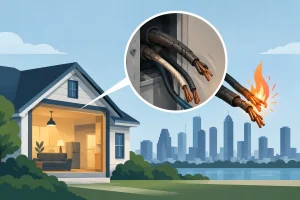
A breaker that trips once may be an inconvenience. A breaker that trips repeatedly, a warm outlet, or a faint burning smell is a reason to act. Can old wiring cause fires? Yes. Aging electrical components can create heat, arcing, and overloaded connections that raise the risk of an electrical fire – especially in Houston-area homes that were built before modern power demands became standard.
Older wiring does not automatically mean a house is unsafe. Many well-maintained older homes continue to serve their owners well. The concern is whether the wiring, panel, outlets, and connections are in good condition and sized for the way your family uses power now. Central air conditioning, kitchen appliances, home offices, EV chargers, entertainment equipment, and smart devices can place far more demand on a system than it was originally designed to carry.
How Old Wiring Can Lead to a House Fire
Electricity creates heat whenever it moves through a conductor. A properly installed, correctly sized electrical system manages that heat safely. Problems begin when aging components become loose, damaged, undersized, or overloaded.
Insulation around old wires can dry out, crack, or become brittle over time. When exposed conductors touch other materials or each other, they can short circuit. Loose connections at an outlet, switch, breaker, or junction box can also create electrical arcing. Arcing is a spark-like discharge that produces intense heat and may occur inside a wall, ceiling, or electrical panel where it is not immediately visible.
Some older homes have wiring methods that deserve special attention. Aluminum branch wiring, knob-and-tube wiring, ungrounded two-prong outlets, and outdated panels may not meet the needs of a modern household. That does not mean every older system requires a full rewire. It does mean a licensed electrician should evaluate its condition, capacity, and safety features before you add major loads or ignore recurring warning signs.
Houston heat adds another layer to the issue. Your air conditioner works hard for long stretches of the year, and that load can expose weaknesses in an aging panel, undersized circuit, or deteriorated connection. A system that seems fine during mild weather may struggle when cooling equipment, kitchen appliances, and household electronics are running at the same time.
Warning Signs Old Wiring May Be Unsafe
Electrical problems are not always dramatic. Often, the system gives homeowners smaller signals before a serious failure occurs. Pay attention if lights dim when the AC starts, outlets feel loose, switches buzz, or breakers trip under normal use.
A burning odor from an outlet, panel, appliance cord, or wall should be treated as urgent. Turn off power to the affected circuit if you can do so safely, avoid using the area, and call for professional help. Do not cover the smell with air freshener or assume it will go away on its own.
Discoloration around an outlet or switch plate is another concern. Brown marks, melted plastic, scorch marks, or a warm faceplate can indicate overheating behind the wall. Flickering lights may be caused by a simple bulb issue, but frequent flickering throughout the home can point to a loose connection, circuit problem, or panel issue.
Watch for these additional signs, particularly in an older home:
- Breakers that trip repeatedly or fuses that blow often
- Extension cords or power strips used as permanent solutions
- Two-prong outlets where grounded outlets are needed
- A panel that feels warm, makes buzzing sounds, or has visible corrosion
- Sparks when plugging in a device or operating a switch
- Appliances that lose power when another large appliance starts
None of these signs should be dismissed as a normal part of living in an older house. The cause might be minor, but diagnosis matters. Replacing a breaker or outlet without finding the underlying fault can leave the real hazard in place.
Why Overloaded Circuits Are Common in Older Homes
Many homes built decades ago were designed for fewer appliances and less always-on technology. A bedroom may have one outlet per wall. A kitchen may have limited dedicated circuits. The electrical panel may have little room for future additions.
Today, a single circuit might be asked to support computers, monitors, phone chargers, televisions, portable heaters, window units, and other equipment. In the garage, homeowners may also want to add an EV charger, refrigerator, power tools, or a freezer. When a circuit is overloaded, wires and connections can overheat before the breaker responds, particularly if the circuit has been modified incorrectly or uses damaged components.
Using a quality surge protector for electronics is sensible, but it does not increase a circuit’s capacity. Neither does swapping a breaker for a larger one. Installing an oversized breaker on wiring that cannot safely carry the extra current is dangerous. The breaker is there to protect the wire. Any circuit upgrade needs to account for wire size, load calculations, breaker rating, and applicable code requirements.
Can Old Wiring Cause Fires Even If the Breakers Work?
Yes. Breakers are a critical safety device, but they cannot prevent every type of electrical failure. A breaker is designed to trip when current exceeds a safe level. It may not respond to a loose connection that generates heat slowly, an intermittent arc, or damage occurring on a section of wiring that is not carrying enough excess current to trigger it.
Modern safety devices can provide added protection in the right locations. Ground-fault circuit interrupter protection helps reduce shock hazards in areas such as kitchens, bathrooms, garages, and outdoor spaces. Arc-fault circuit interrupter protection is designed to detect certain dangerous arcing conditions. Whether your home needs these upgrades depends on the age of the system, the scope of a renovation, and current code requirements.
An electrician can also identify issues a homeowner cannot see, including double-tapped breakers, improper splices, missing junction-box covers, damaged conductors in the attic, and panel corrosion. These conditions may have been present for years without a noticeable problem. That is exactly why a professional inspection is worthwhile before a small concern becomes an emergency repair.
When to Schedule an Electrical Inspection
You do not have to wait for a burning smell or a failed circuit to have your electrical system checked. An inspection is a practical step when buying an older home, planning a remodel, installing a major appliance, adding an EV charger, or considering a standby generator. It is also a smart idea if your home still has an older fuse box, an outdated panel, or ungrounded outlets.
During a professional assessment, the electrician can evaluate the panel, breakers, visible wiring, grounding, outlets, switches, and overall load capacity. If repairs or upgrades are recommended, you should receive a clear explanation of what is urgent, what can be planned, and what benefit each improvement provides.
The right solution varies. One home may need a damaged outlet replaced and a loose connection repaired. Another may need dedicated circuits for the kitchen or garage. A home with an undersized or deteriorated panel may benefit from a panel upgrade that improves capacity, safety, and readiness for future equipment. Full rewiring is sometimes necessary, but it should be based on the actual condition of the home, not a one-size-fits-all recommendation.
What Homeowners Should Do – and Avoid Doing
If you notice signs of overheating, stop using the affected outlet, switch, or appliance. If there is smoke, visible sparking, or fire, get everyone out safely and call 911. Do not attempt to open the electrical panel or repair burned wiring yourself.
Avoid relying on extension cords as a long-term fix for too few outlets. Keep cords clear of rugs, furniture, and doorways where they can be damaged or trap heat. Do not use outlets that are loose, cracked, hot, or discolored. If breakers trip, resist the temptation to keep resetting them without finding out why.
For Houston homeowners, fast problem solving starts with an accurate diagnosis. Spring Electric & A/C can assess electrical warning signs, make safety-focused repairs, and recommend practical upgrades that support reliable power and home comfort.
A safe electrical system is rarely something you notice every day – and that is the goal. If your home’s wiring is showing its age, addressing the issue now can protect your property, reduce disruption, and give your family greater confidence every time the lights come on.


Leave a Reply