
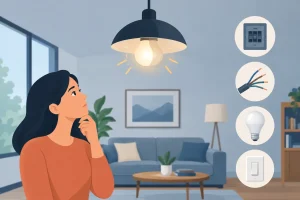
A light that flickers once during a thunderstorm may be nothing more than a brief utility disturbance. But flickering lights in house throughout the day, especially when they dim as the AC starts or appear in more than one room, deserve attention. Your electrical system is sending a signal that something may be loose, overloaded, or no longer sized for how your home uses power.
For Houston-area homeowners, this can become more than an annoyance. Summer cooling, pool equipment, EV chargers, modern appliances, and storm-related power disruptions all place demands on an electrical system. Fast problem solving starts with noticing the pattern and knowing when a simple fix is reasonable versus when it is time to call a qualified electrician.
What Flickering Lights in House Can Mean
The cause depends on which lights flicker, how often it happens, and what else is running at the time. A single lamp may have a simple fixture or bulb issue. Whole-home flickering can point to a more serious electrical connection problem.
A loose bulb, fixture, or switch
If one light flickers and the problem stays limited to that fixture, begin with the basics. Turn the switch off, allow the bulb to cool, and make sure it is securely seated. A worn socket, loose wire in the fixture, or failing wall switch can also interrupt the connection.
LED bulbs can flicker when paired with older dimmer switches that are not rated for LEDs. This is usually not an emergency, but it is worth correcting. The right dimmer and compatible bulbs provide smoother performance and help protect the fixture.
An overloaded circuit
Lights that dim or flicker when a microwave, garbage disposal, refrigerator, washer, or air conditioner cycles on may share a circuit that is carrying too much load. In older homes, rooms and appliances are often connected in ways that no longer match modern electrical needs.
Occasional minor dimming from a large motor starting can happen. Repeated, noticeable flickering is different. It may mean the circuit needs troubleshooting, a dedicated circuit, or an electrical panel upgrade to safely support your equipment.
A loose connection behind the wall or at the panel
Loose wiring connections create resistance and heat. That makes them a safety concern, particularly when the flickering is frequent or affects multiple fixtures. Connections can loosen over time from normal heating and cooling cycles, vibration, past electrical work, or aging components.
A loose neutral connection is especially important to diagnose promptly. It can cause lights to brighten and dim unpredictably, and voltage changes can damage sensitive electronics and appliances. This is not a do-it-yourself repair inside a panel or junction box.
A failing electrical panel or service connection
If lights flicker in several rooms, breakers trip often, or the panel feels warm, the issue may be at the service panel. Older panels may lack the capacity, condition, or safety features needed for a home with central air conditioning, electric vehicle charging, and added appliances.
Service equipment problems can also occur outside the home, including at the meter connection or utility service line. An electrician can inspect the home’s side of the system and help determine whether the utility company should be involved.
A neighborhood utility issue
When your lights flicker at the same time as your neighbors’ lights, or after high winds and storms, the source may be the utility grid. Branches, damaged equipment, and transformer problems can create momentary interruptions or unstable voltage.
Report obvious utility-related symptoms to your power provider, especially if there are downed lines or a widespread outage. Never approach damaged electrical equipment. If the issue appears isolated to your home, schedule an electrical inspection instead of assuming it will resolve on its own.
When Flickering Lights Need Immediate Attention
Some signs call for a prompt service visit, while others may require emergency action. Turn off power to the affected area at the breaker only if it is safe to do so. Do not remove panel covers, touch exposed wiring, or continue using a device that appears damaged.
Call an electrician promptly if flickering comes with burning odors, a buzzing sound, hot outlets or switches, discoloration around a receptacle, sparks, frequent breaker trips, or lights that suddenly get unusually bright. These symptoms can indicate overheating or an unstable connection.
If you see smoke, flames, or arcing, move people away from the area and call emergency services. Electrical fires can travel inside walls and should never be treated as a minor household repair.
Safe Checks You Can Make First
Homeowners can gather useful information without taking electrical risks. Notice whether the problem affects one fixture, one room, or the entire house. Pay attention to whether it happens when the AC starts, when the dryer runs, or during storms. This information helps a technician reach an accurate diagnosis faster.
You can also check that a bulb is tight and confirm whether a dimmer is compatible with LED bulbs. If a breaker has tripped, reset it once by moving it fully to the off position and then back on. If it trips again, leave it off. Repeated resetting can allow a fault to continue and may create a larger problem.
Avoid relying on power strips or extension cords as a permanent solution to overloaded outlets. They do not increase the capacity of the circuit. A properly installed outlet, dedicated circuit, or panel improvement is the safer long-term answer.
Why Houston Homes May See More Electrical Strain
Texas heat puts major demand on home electrical systems. A central AC system can draw significant power at startup, and an aging capacitor, electrical disconnect, or undersized circuit may contribute to lights dimming when cooling equipment runs. Because electrical and AC issues can overlap, diagnosis should look at the full picture rather than treating the light symptom alone.
Homes that have added an EV charger, hot tub, workshop equipment, outdoor kitchen, or expanded lighting may also be using more power than the original panel was designed to deliver. That does not automatically mean you need a full replacement. Sometimes a targeted circuit repair or dedicated line is enough. In other cases, a panel upgrade improves capacity, safety, and room for future projects.
Storm season adds another variable. Surge protection, generator planning, and a properly maintained electrical service can help protect comfort and equipment when utility power becomes less predictable.
How an Electrician Finds the Real Cause
A professional diagnosis is more than replacing a bulb or resetting a breaker. The technician checks the fixture and switch, tests voltage, evaluates circuit load, inspects accessible connections, and reviews the electrical panel for damaged breakers, corrosion, heat, or capacity concerns.
The goal is to identify the source of the voltage change, not simply make the symptom disappear. That matters because a flickering light caused by a loose connection can appear normal for a while, then return at the worst possible time. Accurate diagnostics help prevent costly breakdowns and protect the equipment your family depends on.
Spring Electric & A/C provides residential electrical troubleshooting for small concerns and larger system issues alike. Whether the answer is a fixture repair, circuit correction, panel upgrade, or coordination with the utility provider, the work should be completed safely and in line with current code requirements.
Preventing Future Light Flicker
Not every electrical problem is preventable, but regular attention reduces surprises. Have aging panels evaluated before adding high-demand equipment. Use LED-compatible dimmers, avoid overloading outlets, and address breakers that trip instead of repeatedly resetting them. If your AC startup causes pronounced dimming, have both the cooling equipment and electrical supply checked.
Small electrical symptoms are often easiest to fix early. A stable, well-maintained system supports reliable cooling, safer everyday power use, and the comfort of knowing your home is ready for the demands placed on it.
When lights begin flickering, trust the pattern rather than waiting for it to become a bigger interruption. A timely inspection can turn an uncertain warning sign into a straightforward repair and help keep your home safe, comfortable, and powered when you need it most.


Leave a Reply