A Houston power outage is more than an inconvenience when summer temperatures are high, refrigerators are full, and work or school depends on a charged device. Standby generators provide automatic backup power when utility service fails, helping your household stay safe, comfortable, and prepared until the grid is restored.
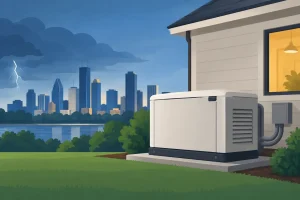
Unlike a portable generator that must be rolled outside, fueled, connected, and monitored, a standby unit is permanently installed outside your home. It detects an outage, starts automatically, and transfers power to the circuits or systems selected during installation. For homeowners who have experienced extended storm outages, that difference can be significant.
How Standby Generators Work at Your Home
A professionally installed standby generator is connected to your electrical system through an automatic transfer switch. Under normal conditions, your home receives power from the utility. When utility power drops out, the transfer switch safely separates your home from the grid and signals the generator to start.
Within seconds, the generator begins supplying electricity to the circuits included in your backup plan. When utility power returns and remains stable, the system transfers your home back to normal service and shuts the generator down. Most units also run scheduled self-tests, so potential problems can be found before a real outage.
That transfer switch is not optional equipment. It protects utility workers, your generator, and your home’s electrical system from dangerous backfeeding. Connecting a generator directly to a wall outlet or panel without approved equipment is unsafe, can damage appliances, and does not meet electrical code.
What Can a Standby Generator Power?
The answer depends on the generator’s capacity, your home’s electrical demand, and what you want to keep running. Some homeowners choose essential-circuit coverage. This usually supports practical needs such as refrigeration, lighting, internet equipment, garage access, select outlets, security devices, and one or more small comfort systems.
Others choose whole-home backup. A properly sized whole-home system can support more of the house, potentially including central air conditioning, well pumps, electric appliances, and multiple large loads. Whole-home power is convenient, but it requires a careful load calculation and may require electrical upgrades. Bigger is not automatically better if a home’s fuel supply, panel capacity, or actual usage has not been evaluated.
For many Houston-area homes, air conditioning is a key part of the conversation. Running a central AC system during an outage may be possible, but it adds substantial demand, especially when the equipment starts. An experienced electrician evaluates the AC equipment, compressor starting load, electrical panel, and the appliances your family considers essential before recommending a generator size.
Choosing the Right Generator Size
Generator sizing should be based on measurements and real household priorities, not a guess based solely on square footage. Two homes of the same size can have very different electrical needs. One may have a gas range and one central AC unit; the other may have electric cooking, two HVAC systems, a pool pump, a well pump, or an EV charger.
A professional assessment considers your major loads, existing panel capacity, and whether you want essential-circuit or whole-home backup. It also considers the fuel source. Natural gas is a popular choice because it provides a continuous fuel supply during an outage, assuming gas service remains available. Propane can be a good option where natural gas is unavailable, but tank size and refill planning matter for long outages.
Avoid planning around every appliance running at once unless that is truly the goal. A thoughtful backup-power design can prioritize what protects your household and keeps daily life manageable. Refrigeration, essential lighting, communication devices, medical equipment, security systems, and cooling often matter more than powering every convenience load.
Your Electrical Panel May Need Attention
A standby generator installation is also an electrical project. Older panels, limited service capacity, outdated wiring, or a crowded breaker panel can affect what is possible. In some cases, a panel upgrade or repairs are needed to create a safe, code-compliant connection for the transfer equipment.
This is where working with a company that understands both electrical systems and home comfort equipment helps. The generator, transfer switch, electrical panel, and HVAC equipment must work together. Proper planning prevents surprises after installation and helps protect the equipment you rely on during an emergency.
Installation Is About Safety, Not Just Backup Power
A standby generator needs more than a concrete pad and a connection to the panel. Placement must allow for manufacturer-required clearances, ventilation, service access, and safe distance from windows, doors, and vents. Local permits and inspections may also apply.
Fuel connections must be sized correctly, electrical wiring must be protected and properly terminated, and the transfer switch must be matched to the system design. These details affect performance when the generator is needed most. They are also why a permanent generator should be installed by qualified professionals, not treated as a weekend electrical project.
Before work begins, ask what the proposal includes. A clear installation scope should address the generator equipment, transfer switch, electrical work, fuel coordination if needed, permits, startup, testing, and homeowner orientation. You should know which circuits are covered, how the system behaves during an outage, and who to call for future service.
Maintenance Keeps Backup Power Ready
A generator that sits unused for months still needs attention. Automatic exercise cycles are helpful, but they do not replace maintenance. Engines need oil and filter service, batteries need inspection, and electrical connections should be checked. A technician can also review fault codes, verify transfer-switch operation, and inspect the enclosure for debris, pests, or weather-related damage.
Maintenance frequency varies by manufacturer, runtime, and local conditions, but annual professional service is a practical baseline for many homeowners. Service may be needed sooner after a long outage or heavy use. Keep the area around the unit clear, and never stack lawn equipment, storage items, or landscaping materials against it.
Homeowners should also pay attention to changes in operation. Repeated failed exercise cycles, warning lights, unusual noises, fuel odors, or a generator that does not transfer power during a test call for prompt service. Waiting until the next storm is the expensive way to find out something is wrong.
Is a Standby Generator Worth It?
For some households, backup power is primarily about comfort. For others, it protects health, food, work responsibilities, security, or a family member who depends on powered medical equipment. It can also help avoid the stress of finding fuel, setting up extension cords, and making repeated trips outside during severe weather.
The investment makes the most sense when it is matched to the way your family actually lives. If outages are brief and infrequent, a smaller essential-circuit system may be the right fit. If your home has recurring outage concerns, vulnerable occupants, remote work requirements, or a strong need to maintain cooling, broader coverage may be worth considering.
Spring Electric & A/C can help Houston-area homeowners evaluate their electrical system, backup-power goals, and installation options with safety and long-term reliability in mind. A good generator plan is not about buying the largest unit available. It is about making sure your home has the right power, in the right places, when you need it most.
Before the next severe-weather forecast fills the gas stations and hardware-store aisles, take time to decide what your household cannot afford to lose power to. That conversation is the best first step toward dependable backup power.


Leave a Reply