
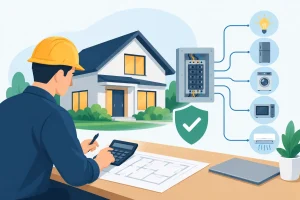
A new EV charger, larger air conditioner, hot tub, or standby generator can place demands on your electrical system that were never part of the original home design. An electrical load calculation shows whether your panel and service can safely support that equipment before installation begins. It is one of the most practical steps a homeowner can take to prevent tripped breakers, overheating, failed inspections, and costly rework.
For Houston-area homes, the question often comes up during an upgrade. Summer cooling equipment runs hard, more families are adding electric vehicles, and older panels may already be serving a full household of appliances. The right answer is not to guess based on an empty breaker space. It is to calculate the actual demand and plan the upgrade around safe code compliance.
What an Electrical Load Calculation Measures
An electrical load calculation estimates the amount of power a home is expected to use under normal maximum conditions. A licensed electrician uses this calculation to determine whether the existing electrical service, panel, feeders, and circuits have enough capacity for the home and any planned additions.
This is different from adding up every number printed on every breaker. Not every appliance operates at full power at the same time, and electrical codes account for that reality through demand factors. A properly prepared calculation applies the correct rules to lighting, receptacles, fixed appliances, cooking equipment, heating and air-conditioning, dryers, EV charging, and other loads.
The result helps answer clear, useful questions: Can the current panel support a 240-volt EV charger? Is a 200-amp service enough for a whole-home generator? Does a new heat pump require a panel upgrade? Are the main breakers and service conductors sized correctly for the home?
Why Empty Breaker Spaces Do Not Prove Capacity
An open slot in a panel only means there is room to install another breaker. It does not confirm that the panel has enough electrical capacity for a new load. A panel can have open spaces while its service is already close to the calculated limit.
This matters with continuous loads, which are expected to run for three hours or more. EV chargers are a common example. A 48-amp charger typically requires a 60-amp circuit, and its load must be treated differently than a device that runs occasionally. The circuit may fit physically in the panel, but the home service may still need evaluation.
Air-conditioning equipment creates another common point of confusion. Your HVAC unit has specific electrical requirements based on its nameplate ratings, not just its tonnage. In the Texas heat, dependable cooling is not optional, so the equipment must have properly sized wiring, overcurrent protection, and available capacity. An electrical load calculation helps ensure the electrical side of an HVAC replacement is ready for the job.
What Is Included in a Home Load Calculation?
A professional calculation starts with the home itself. Square footage is used to estimate general lighting and receptacle demand. From there, the electrician accounts for required small-appliance and laundry circuits, then adds permanent and planned equipment.
Typical items reviewed include:
- Electric ranges, ovens, cooktops, and microwaves
- Clothes dryers, washers, dishwashers, disposals, and refrigerators
- Central air conditioners, furnaces, heat pumps, and air handlers
- Electric water heaters, pool equipment, spas, and workshop tools
- EV chargers, solar-related equipment, battery storage, and generators
- Detached garages, additions, outdoor kitchens, and accessory buildings
The calculation also identifies the home’s existing service size. Many older homes have 100-amp service, while 200-amp service is common in newer homes. Neither number is automatically right or wrong. A 100-amp service can be adequate for some smaller homes with gas appliances, while a 200-amp service may be necessary when a home uses electric heating, multiple HVAC systems, an EV charger, or major outdoor equipment.
Electrical Load Calculation for EV Chargers
EV charging is one of the strongest reasons to schedule an electrical assessment before buying equipment. Level 2 chargers provide much faster charging than a standard wall outlet, but they also create a significant continuous load.
The charger rating, planned charging speed, panel capacity, and location of the parking area all affect the installation. Sometimes a homeowner can install a dedicated circuit without changing the panel. Other times, a load management device, subpanel, or service upgrade is the safer and more cost-effective path.
A lower-rated charger may work well for households that charge overnight and drive moderate daily distances. Faster charging can be worthwhile for long commutes or multiple EVs, but it may require more electrical capacity. The best choice depends on how the vehicle is used, not simply the biggest charger available.
Generator Planning Requires More Than a Panel Size
A whole-home generator is designed around the loads you want to carry during an outage. That may include air conditioning, refrigeration, lighting, internet equipment, medical devices, well pumps, security systems, and selected kitchen appliances. A generator that is too small may not start essential equipment reliably. One that is oversized can add unnecessary project cost.
Load calculations are especially valuable when a homeowner wants central air conditioning to remain available during an outage. HVAC systems have substantial starting and running requirements, and the calculation helps determine whether load shedding, soft-start equipment, or a larger generator is appropriate.
For some families, a managed essential-load system provides the right balance. For others, whole-home backup power is the goal. A qualified electrician can explain the trade-offs, account for present equipment, and leave room for future needs such as an EV charger or pool addition.
When a Panel Upgrade May Be Needed
A panel upgrade is not always the answer, but it can be necessary when the calculation shows insufficient capacity or when the existing equipment has safety concerns. Warning signs include frequent main-breaker trips, warm or damaged panel components, outdated equipment, crowded wiring, corrosion, or reliance on multiple extension cords and power strips.
You may also need an upgrade if the panel cannot accept the correct type of breaker, if a planned circuit requires more capacity than is available, or if service conductors and meter equipment are undersized. In some cases, a subpanel can organize additional circuits, but it does not increase the capacity of the main electrical service. That distinction is critical.
A professional evaluation should also consider local permitting and inspection requirements. Safe code compliance protects your household, supports insurance and resale documentation, and helps avoid delays once a project is underway.
Can Homeowners Calculate Their Own Electrical Load?
Homeowners can gather useful information before an estimate. Note the home’s square footage, panel amperage, major appliance types, HVAC nameplate details, and any planned upgrades. Photos of the panel, meter area, and equipment labels can also help an electrician prepare for the visit.
However, a do-it-yourself estimate should not be the final basis for modifying a panel or installing high-demand equipment. Load calculations require code knowledge, accurate equipment data, and an understanding of how circuits, feeders, and service equipment work together. A simple online calculator may overlook demand factors, continuous-load requirements, local rules, or the limits of older electrical equipment.
Electrical work inside a panel carries real shock and fire risk. If breakers trip repeatedly, lights dim when equipment starts, or you are planning a major addition, treat those conditions as a reason to call a qualified electrician rather than a weekend project.
Plan Capacity Before You Need It
The best time for an electrical load calculation is before purchasing major equipment or starting a remodel. It gives you reliable options early, when decisions are easier and less expensive. You may find that your current system is ready for the upgrade, or you may learn that a panel or service improvement will provide safer, more dependable power for years.
Spring Electric & A/C helps homeowners assess electrical capacity for panel upgrades, EV chargers, generators, HVAC equipment, and everyday electrical concerns. A clear assessment replaces guesswork with a plan built around your home, your comfort, and the way you actually use power. When your electrical system has room to work safely, every improvement you make has a stronger foundation.


Leave a Reply